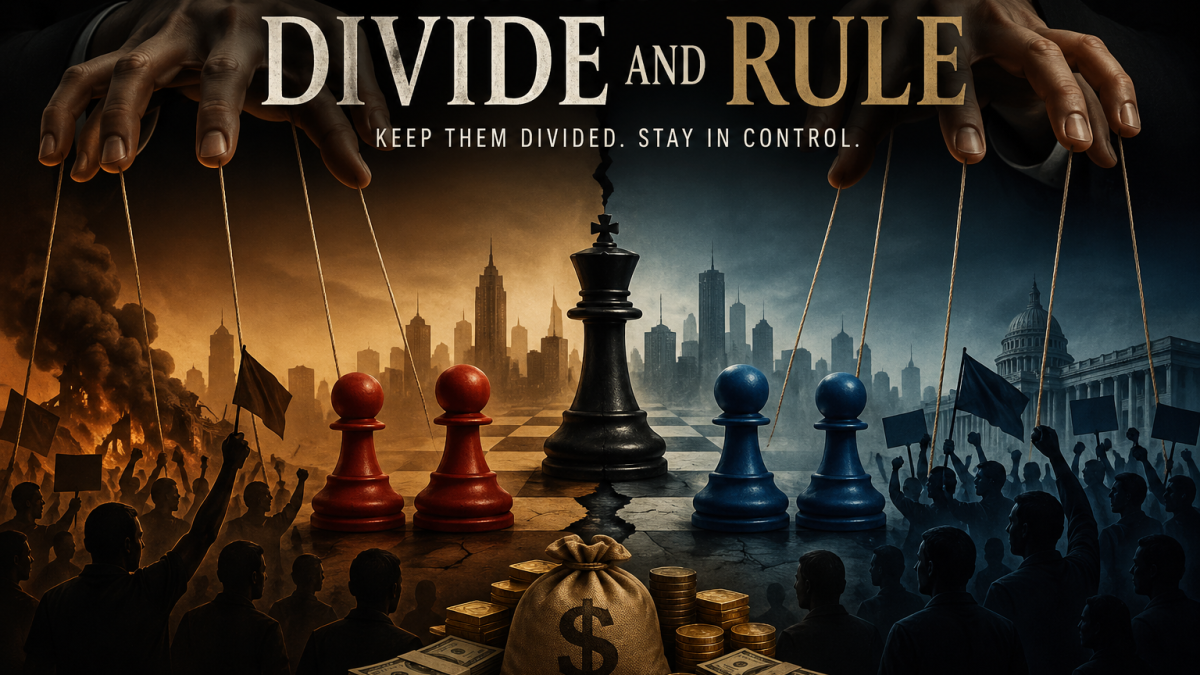
We, the Global South, think of the British as the originators of divide and rule. Sure, they were the most effective and efficient in deploying the tactic. However, the concept of divide and rule did not begin in Europe. Sun Tzu, in The Art of War, gives us insight into the techniques used in wars in ancient China.
He says: if the enemy’s forces are united, separate them. To secure ourselves against defeat lies in our own hands, but the opportunity to defeat the enemy is provided by the enemy himself. By discovering the enemy’s dispositions and remaining invisible ourselves, we can keep our forces concentrated, while the enemy’s must be divided.
While this is in the context of an ongoing war, the same logic can be applied to geopolitical strategies, economic warfare, and the occupation of territories. When you have multiple enemies or a large enemy with multiple factions within, it is in your best interest to divide them such that they are unable to unite.
Who appears effective in their application of the strategy in 2026? Israel has been able to sow some discord in Lebanon between Hezbollah and the government in Beirut. Some analysts have pointed to Israel’s intentions to weaken Iran as well as the Gulf countries (and through them the facade of American protection) in order to become the regional superpower and push forward with its Greater Israel agenda.
The politics of Nigel Farage through Reform UK and Narendra Modi through the Bharatiya Janata Party are often seen as similar in approach. They pit the working class against each other through controversial talking points while working with their billionaire capitalist friends to achieve a state of constant distraction that veils them from their actions behind the curtains, that of consolidating economic power within their respective countries.
Amazon is a good example of a winner in business through the divide-and-rule stratagem. They built a marketplace that pits sellers against each other on price. When the product category becomes successful, they swoop in using their own private labels to beat the winners. Often large companies follow the Amazon approach in creating competition between vendors and negotiate behind the other vendor’s back until they bring down the final cost of purchase.
While the idea of divide and rule is often considered negative, there are positive elements to this strategy. When you are faced with a seemingly gigantic problem, you may use the approach to tackle it bit by bit until the challenge is solved. At the onset of the Iran war, we had to take decisions concerning the entire company. Breaking the business into smaller departments and looking at their impacts individually helped us take quick decisions in keeping the business agile. A strategy depends on the one who wields it. What is the point of winning if it creates lifelong enemies?
